
Published on 6 February 2026 (as previously published on 31 January 2026 by https://conservativepost.com)
Introduction
Angela Rayner has not stopped being ‘on manoeuvres’ since her removal as Deputy Prime Minister for failing to adhere to the Ministerial Code in the matter of paying the correct Stamp Duty on her flat purchase in Hove.
She must fancy her chances of going directly in Number 10 Downing Street, should the current incumbent be forced out, or fall on his sword.
However, there are unresolved issues about the flat, beyond the Stamp Duty amount and beyond the potential over-valuation of the 25% share of a property that was conveyed into her son’s trust in order to release the £162,000 deposit she put down on it.
These matters relate to us all being equal before the law, and being treated equally by organisations like the electoral authorities, the Court of Protection, and solicitors/conveyancers. There cannot be any shortcuts just because the person involved is publicly prominent: in fact it should be the opposite.
These matters also shine a light on qualities – or rather in this case their possible absence – that should be pre-requisites for those aspiring to high public office.
Registration on the Electoral Roll
The Electoral Commission may in due course confirm what the rules are, but for most of us it is that we have a principal place of residence, and that we are on the electoral roll of the constituency in which that place of residence is located. This enables us to cast one vote in all relevant polls – local and national elections, and referenda (e.g. Brexit, Proportional Representation) – that are held in that constituency.
What has Angela Rayner’s situation been over the last twenty years:
- On which electoral rolls has she been registered?
- Has she ever been on the electoral roll in more than one constituency at the same time?
- If she is or has been, has she duly fulfilled the declarations one makes when applying to go onto the electoral roll, and in every constituency where she has been on it?
- What evidence did she present to each respective authority to prove her eligibility to go on the electoral roll?
- Was that evidence true at the time of registration?
- Has it remained true?
- Has she ever failed to alert the respective authorities to her changes-in-circumstance that might have required her to come off an electoral roll in a given constituency?
Voting
We need to have a listing of all the elections over the last twenty years in which Angela Rayner has cast a vote, either in person, by proxy, or through a postal vote.
This will corroborate her being on the electoral roll in a given constituency, and whether she cast a vote in any or all of the elections held in that constituency while she was on the electoral roll.
Furthermore it will demonstrate whether she voted more than once in any election or referendum thanks to being a registered elector in more than one constituency at the same time.
Establishment of a trust for Ms Rayner’s son in 2020 and what its funds were invested into
The trust for Ms Rayner’s son was reportedly established in 2020, as a Disabled Person’s Trust.[1] The trustees were Ms Rayner, her then husband Mark Rayner, and a third-party trustee.[2] The trust fund was established for the care and needs of her son for his whole life.[3] One or more court orders are in place around the matter, so not all details by far are in the public domain, although there seems to be no dispute that the trust’s money derived from a compensation payment made by an NHS Trust (i.e. from the public exchequer) to settle a medical negligence claim.[4]
One would expect the trust fund to invest its resources in shares and bonds so as to be able to meet the beneficiary’s needs as they materialise and over an extended period of time. No portion of the Rayner matrimonial home was conveyed into the ownership of the trust when it was established, indicating that, at the time, a part-ownership of that home was not deemed to be either a suitable or necessary investment for the trust’s money.
Alteration of trust assets at the time of Ms Rayner’s divorce settlement in 2023
Then, in 2023, Mr and Ms Rayner divorced:
‘In 2023, the Family Court in Manchester approved a consent order for the financial arrangements following her divorce from Mark Rayner, which included the MP retaining a 25% interest in their former matrimonial home, with the trust receiving the remaining 75%.’[5]
Did Mr and Ms Rayner own the matrimonial home jointly, such that Mr Rayner sold out all of his 50% share and Ms Rayner sold out half of her 50% share?
Did the trust ‘receive’ 75% of the assessed value of the matrimonial home, or did the trust buy the interest in exchange for cash? If so, to whom was the cash distributed and in what amounts? What assets were sold by the trust in order to generate the cash payment?
Why was a part-ownership of the matrimonial home deemed in 2023 to be a suitable and necessary investment for the trust’s money, when it was not so three years earlier?
Was the Family Court the correct forum for these matters to be decided upon? Was the transaction approved also by the Court of Protection, which is the public authority towards all arrangements for the well-being of those who lack capacity to make their own decisions, whether it because they are too young to do so, or because of a medical or mental condition?
Specifically did the Court of Protection take a view on the difference between investments that produce income – like shares and bonds – and an investment in a three-quarter share of a property occupied by some portion of the Rayner family that would only produce rental income if the family paid the trust to be allowed to live there?
Was any rent paid? If so, how was it calculated?
Why actually does a divorce of two of the trustees of a trust create a need to alter the assets of the trust? In what way was this transaction of benefit to the trust beneficiary?
Legality and due process of transferring money out of a trust fund in which she was a trustee
We learn that in January 2025, Ms Rayner sold her 25% share in the property to the trust for around £162,000 and put this amount towards the flat in Hove, whose purchase price has been reported as £800,000.[6]
In what way was this transaction of benefit to the trust beneficiary? Why was the full ownership of the home now deemed to be a suitable and necessary investment for the trust’s money, when a 75% share was good enough two years before, and no ownership at all was good enough five years before?
Were income-producing assets belonging to the trust – like shares and bonds – liquidated in order to pay out the £162,000? Who else has since resided, or had the right to reside, in the former matrimonial home? Have they paid rent to the trust?
As McHale and Co laid out in their commentary, ‘the trust must ensure that:
- Any income or capital is applied only for the benefit of the disabled person, and
- The disabled person is either entitled to all income, or receives discretionary distributions solely for their benefit.’
Angela Rayner must surely have used a solicitor with regard to these complex matters: which one? Was it the same one as is acting as trustee? It would have been dangerous and irresponsible to have tried to arrange these matters without any suitable legal advice. The source of the advice is also important, as its givers were duty-bound to supply ‘best advice’ and act only if they had no conflict-of-interest. One would hope that Ms Rayner had the good sense to appoint a different solicitor from the one who was a trustee, as there would be a conflict-of-interest for a single solicitor in simultaneously representing Ms Rayner’s interests in getting together the deposit for her flat, and in representing the trust’s interests of maximising income and capital to protect the beneficiary. No single solicitor should have accepted both roles.
Was the approval of the Court of Protection sought for this transaction? If approval was sought, was it granted? On what basis was approval granted?
Various permutations come to mind:
- the Court of Protection was consulted and did give approval:
- the request for approval needs to be published so that one can verify that it was full, fair, and accurate;
- if the submissions now turn out not to have been full, fair, and accurate, what does the Court of Protection propose to do about the matter?
- The Court of Protection was consulted and did not give approval, but the transaction went through anyway:
- what was their objection?
- what do they propose to do about the matter now that it turns out that the transaction has gone through without their approval?
- The Court of Protection was not consulted:
- should they have been consulted?
- If so and they have not been, what do they propose to do about the matter?
These are serious matters and a position-taking from the Court of Protection is required.
In the very worst eventuality, a trustee who arranges for trust assets to be conveyed out of a trust for their personal benefit has committed a criminal offence, albeit not as serious an offence as when no asset of equivalent value was conveyed into the trust in exchange.
Upon conviction for such an offence, the amount extracted from the trust could rank as the proceeds of crime, subject to POCA (the Proceeds of Crime Act). In that case POCA would dictate that the £162,000 should be forfeit, necessitating its repayment to the court, without the 25% share of the property conveyed into the trust automatically being returned. It would be up to the court to decide how the various assets should be parcelled up and allocated.
Compliance with Anti-Money Laundering Regulations
The final angle for investigation, through the Solicitors Regulation Authority, is the compliance by the conveyancer in Herne Bay used by Ms Rayner for the purchase of the flat in Hove with Anti-Money Laundering regulations.[7]
Why was this conveyancer chosen? What is Ms Rayner’s connection with the firm and with Herne Bay? Assuming Angela Rayner did take the proper legal advice regarding the payment of money from her son’s trust (advice that the conveyancer is not permitted to provide), why not use the same firm to do the conveyancing of the flat? After all, that would have saved both her and the new firm the compliance burden imposed by Anti-Money Laundering regulations.
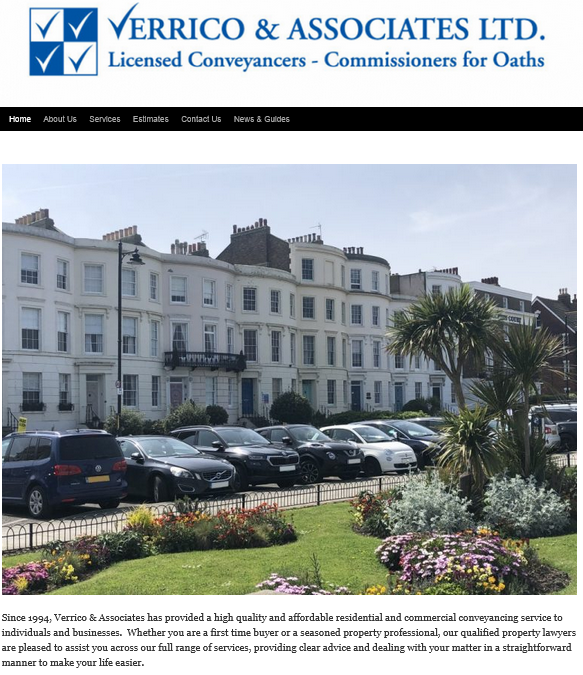
Verrico & Associates (the conveyancer[8]) ranks as a so-called ‘obliged entity’ under Anti-Money Laundering regulations and it has obligations under the law which it must discharge both regarding Ms Rayner herself and the £162,000 deposit.
Ms Rayner should have been put through Enhanced Due Diligence given her status as a Politically Exposed Person (a PEP), and before her being taken on as a client by Verrico. This is the set of processes that Nigel Farage was subjected to by Coutts, and which resulted in an internal report dozens of pages long. The internal report compiled by Verrico on Ms Rayner needs to come into the public domain.
As regards the £162,000, Verrico needed to verify the ‘source of funds’. This is the set of procedures that any ‘Bank of Mum and Dad’ has to go through when contributing to a deposit. What were Verrico told was the source? Again the respective application by Ms Rayner and the evidence she submitted that her representations were true need to come into the public domain.
Summary and conclusions
If Angela Rayner intends to take up another office in government – or in fact to remain as an MP – a good deal more disclosure is required about her places of residence, where she was on the electoral roll, her voting history, the transactions around her son’s trust fund, and the Anti-Money Laundering compliance around the purchase of her flat in Hove.
It needs to be proven that she has both conducted her affairs, and been treated by authorities, in the same way as anyone else is required to, and, on top of that, complied with the extra regulations applicable for those who are prominent.
It needs also to be proven that she is competent to hold a public office, for which common sense, an awareness of the constraints imposed by law and regulation, and the taking and heeding of professional advice should be pre-requisites.
[1] https://mchaleandco.co.uk/disabled-persons-trusts-what-the-angela-rayner-case-reveals-about-getting-it-wrong/ accessed on 18 January 2026
[2] It has been speculated that the Court of Protection was nominated as a trustee and elsewhere that it was a law firm; the former would be highly unusual and the latter is the more likely, though again that is a fact that does not appear to be in the public domain
[3] https://www.goodlawsolicitors.co.uk/insights/angela-rayner-case-personal-injury-trusts/ accessed on 18 January 2026
[4] https://www.theguardian.com/politics/2025/sep/01/angela-rayner-barred-court-order-second-home-tax-details accessed on 18 January 2026
[5] https://associationofcostslawyers.co.uk/costs-lawyer-journal/newspaper-ordered-to-pay-costs-of-childs-trust-involved-in-angela-rayner-case/ accessed on 18 January 2026
[6] https://associationofcostslawyers.co.uk/costs-lawyer-journal/newspaper-ordered-to-pay-costs-of-childs-trust-involved-in-angela-rayner-case/ accessed on 18 January 2026
[7] The Money Laundering, Terrorist Financing and Transfer of Funds (Information on the Payer) Regulations 2017
[8] https://www.joannaverrico.com/ accessed on 18 January 2026